
What the World Cup Is and Why It Matters Economically
The FIFA World Cup is the largest international sporting event in the world, held every four years and bringing together 48 national teams in 2026. Beyond soccer, it’s a global economic engine, driving tourism, hospitality, transportation, retail, and food & beverage spending across every host city.
For Kansas City, hosting six matches, including group stage games, one round of 32 match, and a quarterfinal, means the region suddenly becomes a global destination for more than a month. According to KC2026 and VisitKC projections, roughly 650,000 visitors are expected to come to the metro area over the tournament’s duration, translating to a direct economic impact exceeding $653 million from travel, accommodation, dining, entertainment, and local services alone.
Why Restaurants Care or Should Care:
-
High visitor numbers mean unprecedented foot traffic in restaurant districts.
-
Local and international demand spikes can boost revenue beyond typical peak seasons.
-
Tourist spending tends to skew toward food, drink, and entertainment, key revenue categories for bars and eateries.
Put simply: you’re not just feeding locals — you’re feeding the world, for weeks.
Expected Visitor Numbers (Local vs. International)
According to official host city projections, the Kansas City region anticipates 650,000 unique visitor days , a term defined as one visitor spending one day or overnight in the destination, based on six matches and ancillary events.
What That Means for Hospitality:
- Local fans vs. out-of-town visitors: A mix of domestic and international travelers will be in town. While local support will be strong, the economic benefit comes from visitors staying nights, eating meals, and spending money outside match times.
- Accommodations pressure: Rooms will fill fast, and likely command premium rates, as seen in other host city markets where occupancy rates and hotel pricing surged significantly during past large sporting events and World Cup host preparations.
- Length of stay: Many international visitors plan multi-day stays, not just single-match trips. That means repeat visits to restaurants, bars, and service providers over multiple days, rather than just one big match night.
-
Kansas: There are 21,830 hotel rooms within 2.5 hours of Kansas City that will generate an estimated economic impact of $163.1 million and $10.7 million in state taxes.
-
Missouri: There are 36,720 hotel rooms within 2.5 hours of Kansas City that will generate an estimated economic impact of $489.4 million and $20.7 million in state taxes.
-
Restaurant operators should plan staffing, inventory, and service flow with cycling crowds across multiple days, not one-off surges.
Estimated Economic Impact for Kansas City
Regional Impact Overview:
KC leaders estimate the World Cup will generate:
- $653 million+ in direct economic output for the Kansas City metro.
This Includes Spending On:
-
Hotels and short-term rentals
-
Dining and nightlife
-
Transportation services
-
Retail and tourist experiences
-
Match-related events and fan festivals
What that Impacts for Restaurants & Bars:
Increased Per-Customer Spending
-
Visitors often spend more per visit than local diners, especially on beverages and group meals.
-
International guests tend to dine multiple times per day, breakfast, lunch, dinner especially on non-match days.
Traffic Diversification
- Match days funnel crowds near GEHA Field at Arrowhead Stadium and the FIFA Fan Festival zones at WW1 Memorial.
- Non-match days attract foot traffic throughout downtown, cultural districts, and entertainment corridors.
Back-of-House Impact
-
More volume means pressure on supply chains, staff scheduling, and peak-hour readiness.
-
This is a once-in-a-lifetime type of influx for most KC venues, not just a major holiday or regular peak night.
Math Schedule & Key Dates for Kansas City Hosts
The World Cup runs from June 11 to July 19, 2026 nationally, but Kansas City’s match cluster is concentrated in mid- to late-June and early July.
While the exact team lineups may evolve with draws made closer to June, the current known dates for matches in Kansas City include:
-
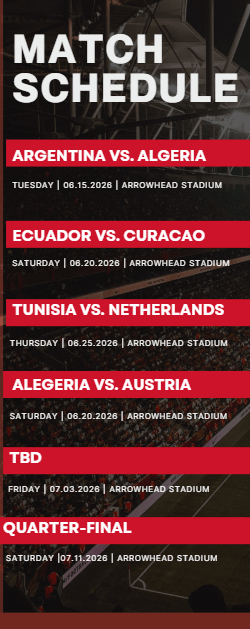 June 16: Group Stage Match (e.g., Argentina vs Algeria)
 -
June 20: Group Stage Match (Ecuador vs Curacao)
-
June 25: Group Stage Match (Tunisia vs Netherlands)
-
June 27: Group Stage Match (Algeria vs Austria)
-
July 3: Round of 32 Match
-
July 11: Quarterfinal Match
Note: Tournament schedule can evolve (team matchups may change), so operators should verify on the official KC2026 calendar as the event approaches.
Operational Takeaways:
-
Peak restaurant demand is likely 2–3 hours before matches and 2–4 hours after matches conclude.
-
Days with multiple matches nearby or in other host cities may still bring expanded tourist flows into town for secondary viewing, fan events, and dining.
Historical Impact on Restaurants in Past Host Cities
Looking at World Cups in other cities and similar mega sports events provides useful lessons for Kansas City operators:
FIFA World Cup Global Patterns
- Major events often produce significant boosts in food & beverage spending. For instance, research estimates billions of euros/dollars in food & drink purchases tied directly to World Cup tournaments in Europe where fans gather to watch games.
U.S Mega Sports Events as Proxies
- Large events like the NFL Super Bowl have driven 20%+ year-over-year spikes in restaurant traffic and reservations in host markets, with smaller restaurants experiencing sales on par with peak holidays.
Lessons for Kansas City
- Preparation matters: Cities that planned ahead with staffing, supply logistics, and marketing tied to event calendars, captured far more of the economic benefit than those that reacted last minute.
- Venue Proximity Drives Traffic: Restaurants and bars near stadiums and fan fest areas often see the largest surges in volume.
- Extended stays boost revenue: Visitors staying multiple days, not just match nights, increase overall meal counts.
Unlike some past host cities where stringent vendor restrictions limited local participation (e.g., restrictive vendor fees in South Africa 2010), Kansas City’s event strategy, including an official KC Game Plan for Small Business, aims to empower local hospitality operators to capitalize on visitor spending across the metro region.
Leverage Resources from the official KC2026 Host City Playbook and Visit KC economic data to inform staffing, inventory, and marketing decisions.