

Missouri Restaurant Association's World Cup Economic Impact Report
Missouri Restaurant Association Releases Comprehensive Study on Restaurant Industry Experiences During the 2026 FIFA World Cup
Survey of 39 hospitality businesses representing 116 locations offers one of the first restaurant-focused analyses of the tournament's economic impact
The Missouri Restaurant Association (MRA) has released the findings of its 2026 FIFA World Cup Restaurant Economic Impact Survey, providing one of the first comprehensive looks at how restaurants and hospitality businesses across the Kansas City metropolitan area experienced the world's largest sporting event.
The survey collected responses from 39 restaurant and hospitality businesses representing 116 locations across the region. Participants included independent restaurants, multi-unit operators, breweries, coffee shops, bars, and quick-service restaurants located throughout nearly every major business district in the metropolitan area.
Rather than focusing solely on regional economic projections, the study examined the experiences of individual restaurant operators, including customer traffic, revenue, staffing, promotions, operating hours, visitor activity, and recommendations for future major sporting events.
"Our goal was to better understand how restaurant operators actually experienced the World Cup at the business level," said Trey Meyers, Director of Marketing & Communications for the Missouri Restaurant Association. "Major events are often evaluated using regional economic indicators, but it is equally important to hear directly from the businesses serving visitors every day. This survey provides valuable insight into what worked, what challenges operators encountered, and how future events can better support Missouri's hospitality industry."
Among the study's findings:
- More than half of respondents reported lower customer traffic than expected during the tournament.
- Nearly six in ten businesses described the overall impact on their operation as negative, while others reported meaningful success, particularly during match days and in businesses that attracted international visitors.
- Many operators cited valuable opportunities to serve guests from around the world and participate in the excitement surrounding the event, even when financial outcomes varied.
- Respondents consistently emphasized opportunities to improve future planning through more localized business engagement, realistic forecasting, stronger promotion of neighborhood restaurants, and broader distribution of visitor activity throughout the metropolitan area.
While individual business experiences varied considerably, the report concludes that the World Cup generated significant regional excitement and international exposure, but that the economic benefits were not experienced evenly across the restaurant industry.
"The findings are not about assigning blame or questioning the value of hosting world-class events," Meyers said. "Kansas City demonstrated that it can successfully host an event of global significance. This report is about identifying opportunities to ensure future events create even greater economic benefits for restaurants, hospitality businesses, and local communities throughout the region."
The Missouri Restaurant Association hopes the report will serve as a resource for policymakers, tourism organizations, event planners, chambers of commerce, and hospitality leaders as Kansas City prepares to host future national and international events.
The full report includes detailed analysis of customer traffic trends, revenue impacts, staffing decisions, promotional strategies, operational challenges, and recommendations submitted directly by restaurant operators.
Executive Conclusion
The Missouri Restaurant Association's World Cup Restaurant Economic Impact Survey provides one of the first direct assessments of how Kansas City's hospitality businesses experienced the 2026 FIFA World Cup. Representing 39 businesses operating 116 restaurant and hospitality locations across the metropolitan area, the survey offers valuable insight into how operators perceived the event after months of preparation.
Overall, the findings suggest that the World Cup generated substantial regional excitement and international visibility but did not produce broad-based economic gains for the restaurants represented in this survey.
The survey consistently found that many businesses invested significant time and resources preparing for increased demand. Operators expanded staffing, extended operating hours, developed special promotions, increased marketing efforts, and adjusted operations in anticipation of unprecedented visitor activity.
However, those investments often did not translate into corresponding increases in customer traffic or revenue.
More than half of respondents reported declines in both customer traffic and sales revenue during the tournament period. Nearly six in ten rated the World Cup's overall impact on their business as negative, while fewer than one in ten described the experience as positive.
At the same time, the survey demonstrates that benefits were not absent, they were simply unevenly distributed.
Many businesses enjoyed serving international guests, meeting visitors from around the world, participating in the excitement surrounding the tournament, and experiencing stronger business during selected match days, particularly matches involving the United States. Several businesses also reported meaningful increases in revenue, demonstrating that opportunities did exist for certain operators.
The evidence therefore does not support the conclusion that the World Cup failed to generate economic activity. Rather, it indicates that the distribution of that activity varied considerably across the restaurant industry.
Key Findings at a Glance
Survey Overview:
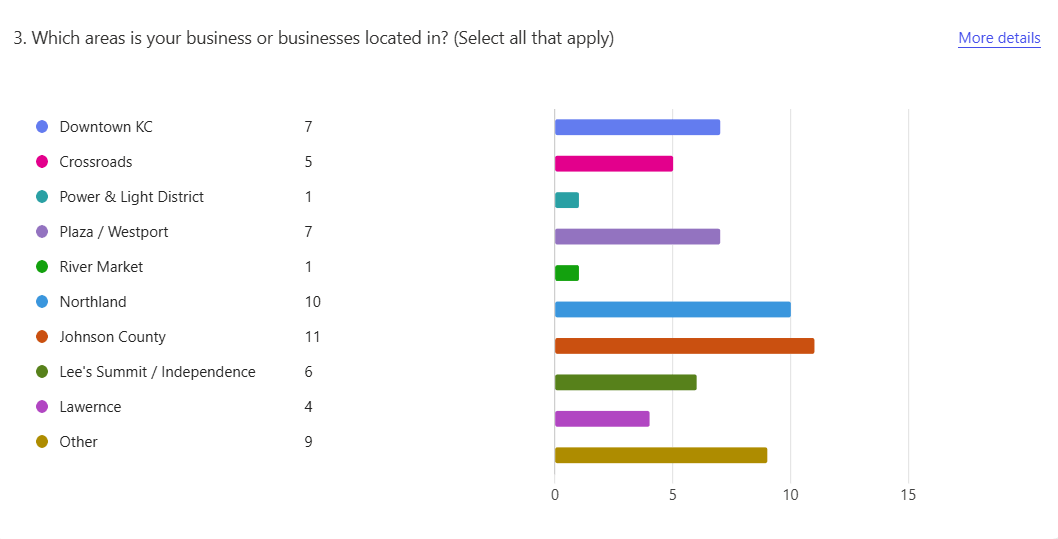
- 39 restaurant and hospitality businesses participated
- 116 restaurant locations represented
- Responses from businesses across nearly every major district in the Kansas City metropolitan area
- Representation ranged from independent restaurants to multi-location operators and businesses of all sizes
Customer Traffic:
- 51.3% reported a decrease in customer traffic.
- 38.5% reported no significant change.
- 10.3% reported an increase in customer traffic.
Key Takeaway: More than half of respondents experienced lower customer traffic during the tournament.
Revenue Generation:
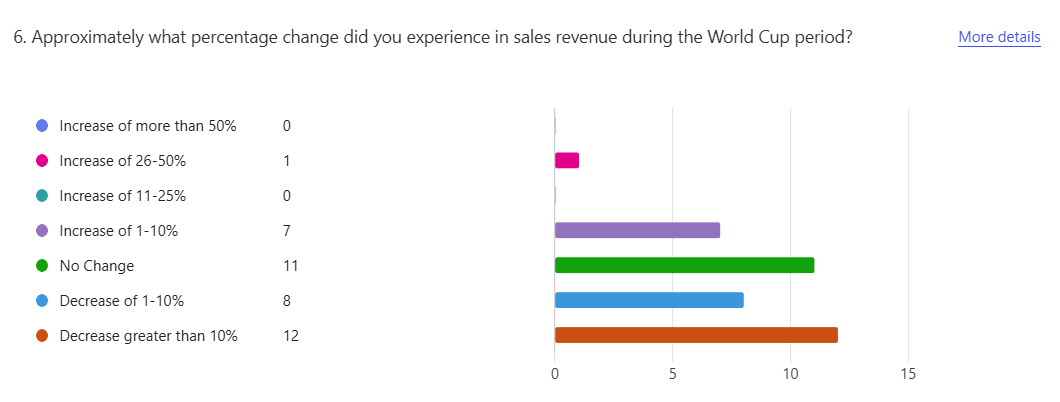
- 51.3% reported an overall decline in revenue.
- 30.8% reported revenue declines greater than 10%.
- 20.5% reported revenue increases.
- 79.5% experienced either declining or unchanged revenue.
Key Takeaway: Revenue trends closely mirrored changes in customer traffic.
Overall Business Impact:
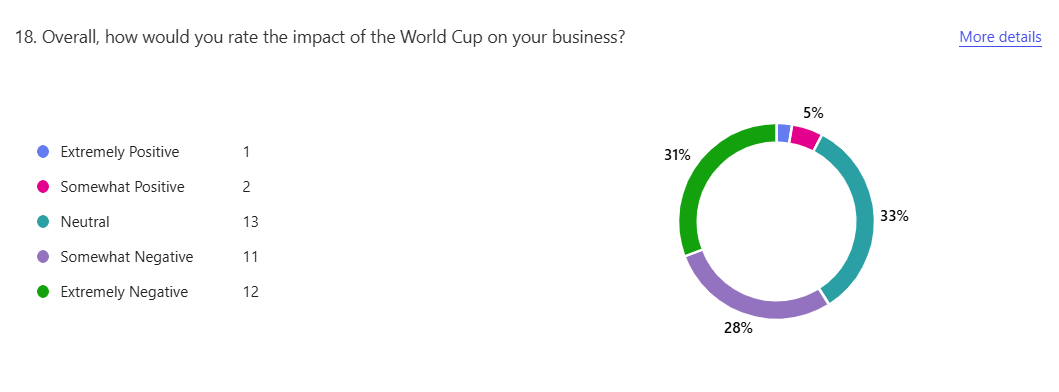
- 59.0% rated the World Cup's impact as negative.
- 33.3% rated the impact as neutral.
- 7.7% rated the impact as positive.
Key Takeaway: Most respondents viewed the tournament as having little or negative impact on their business.
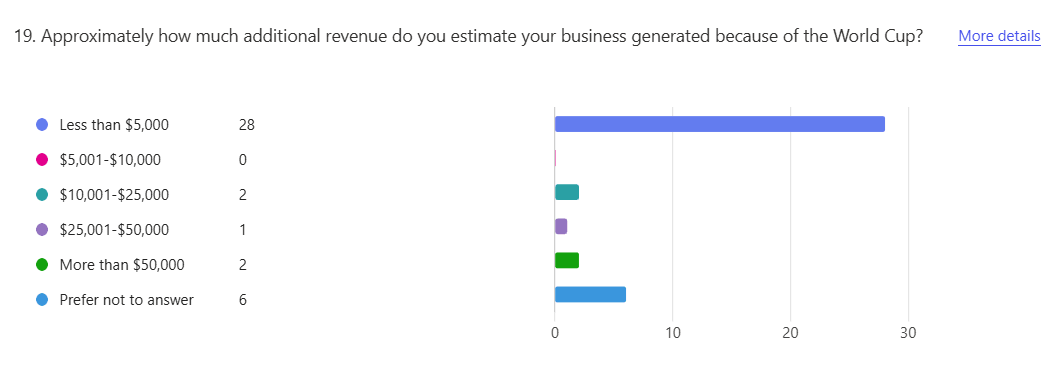
Additional World Cup Revenue:
- 71.8% estimated less than $5,000 in additional World Cup-related revenue.
- Only 5 businesses reported generating more than $10,000 in additional revenue.
Key Takeaway: Significant financial gains were concentrated among a relatively small number of businesses.
Staffing & Operations:
- 33.3% increased staffing.
- Approximately 34–40 additional shifts were added across responding businesses.
- 30.8% extended operating hours.
- 81.8% reported that extended hours produced little or no meaningful benefit.
Key Takeaway: Many businesses invested additional resources that did not generate expected returns.
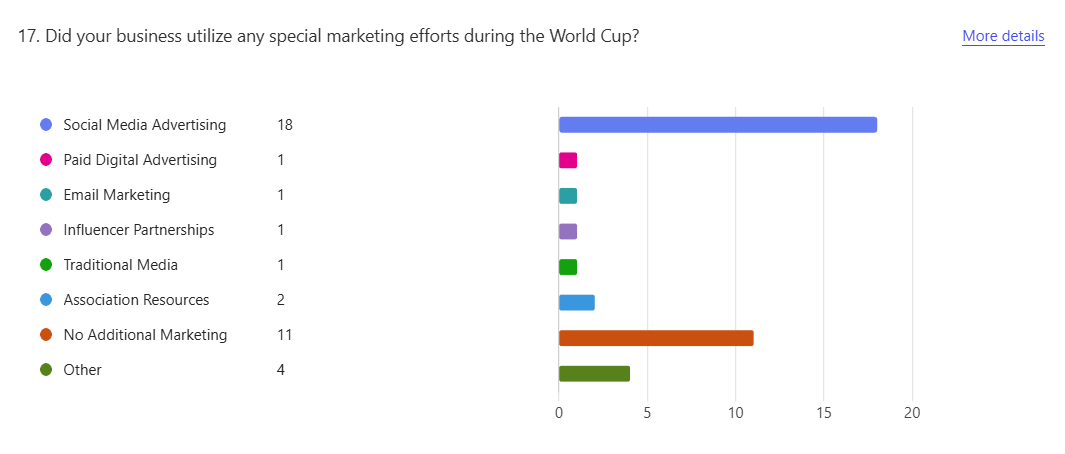
Marketing & Promotions:
- 53.8% offered World Cup promotions.
- 46.2% hosted no special promotions.
- 46.2% used social media advertising.
- Watch parties were the most common promotional strategy.
Key Takeaway: Promotional efforts generated mixed results and were generally most successful during match days.
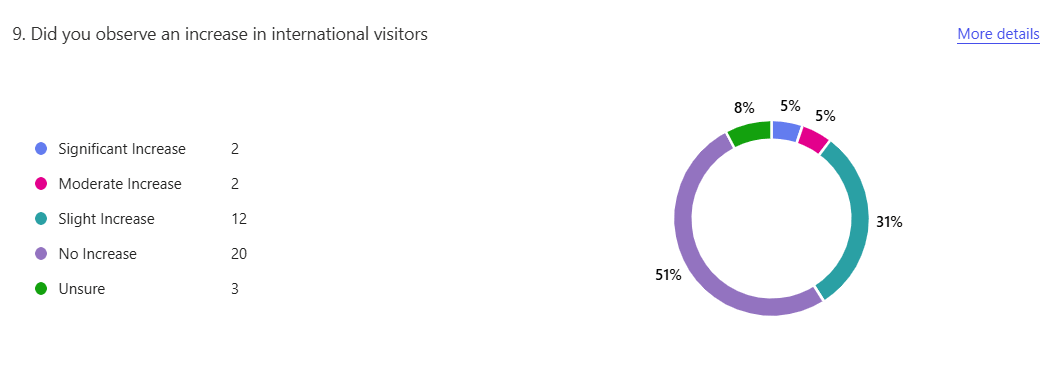
Visitors:
- 41.0% observed at least some increase in international visitors.
- 38.5% reported attracting customers from outside the Kansas City region.
Key Takeaway: International visitors were present, but their spending was unevenly distributed across businesses.
Common Benefits Reported
Businesses most frequently cited:
- Meeting international visitors
- Increased activity during match days
- Community excitement and atmosphere
- Brand exposure and promotional opportunities
Key Takeaway: Cultural and experiential benefits were more consistent than financial gains.
Biggest Challenges:
The most frequently reported challenges included:
- Lower-than-expected customer traffic
- Loss of regular customers
- Difficulty forecasting demand
- Limited visitor movement beyond official event areas
- Investments that failed to generate expected returns
Key Takeaway: Many businesses prepared extensively for increased demand that ultimately did not materialize at their locations.
Key Themes Identified
Businesses Prepared for Growth
Restaurants actively prepared for increased demand by:
- Increasing staffing levels.
- Extending operating hours.
- Creating special promotions and watch parties.
- Investing in marketing campaigns.
- Purchasing inventory and preparing operations for higher customer volumes.
These actions demonstrate that operators responded proactively to expectations surrounding the event.
Demand Was Uneven
Despite those preparations, many respondents reported that anticipated customer volumes did not materialize.
More than half experienced decreases in both customer traffic and revenue.
Many estimated less than $5,000 in additional World Cup-related revenue, while a relatively small number reported substantial financial gains.
These findings suggest that visitor spending was concentrated among specific businesses, locations, and event periods rather than broadly distributed throughout the restaurant community.
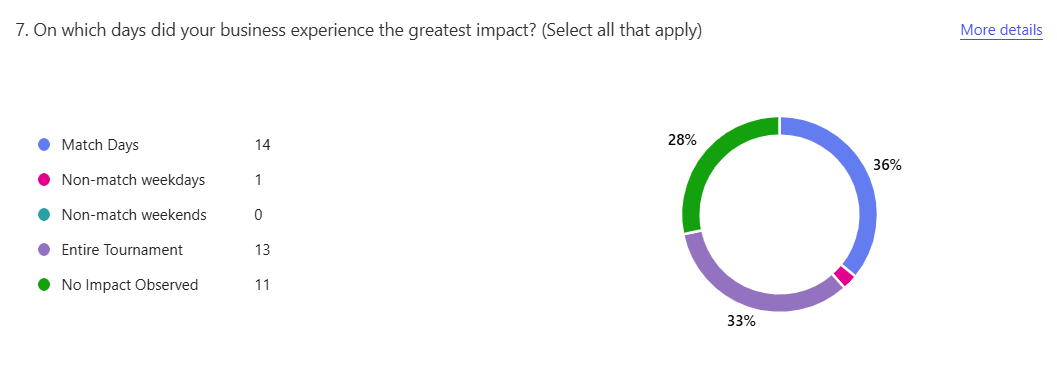
Match Days Produced the Strongest Activity
One of the most consistent findings throughout the survey was that business activity was concentrated around match days.
Watch parties, televised matches, and sports-related promotions generated the strongest customer response.
Outside those peak periods, many businesses reported little measurable impact.
International Exposure Was Real
Although financial results varied, many operators described positive experiences interacting with international visitors.
Businesses cited opportunities to:
- Serve guests from around the world.
- Meeting new customers.
- Showcase Kansas City's hospitality.
- Participate in an event of global significance.
These cultural and community benefits were among the most frequently identified positive outcomes.
Expectations Were a Major Factor
Perhaps the strongest theme throughout the survey was the difference between anticipated and actual business performance.
Many respondents indicated they prepared based on expectations of significantly increased demand.
When that demand did not materialize for their businesses, operators frequently reported disappointment, not necessarily because visitors failed to come to Kansas City, but because those visitors did not translate into sustained business at their establishments.
Lessons for Future Major Events
The survey responses consistently point toward several opportunities for improvement as Kansas City prepares for future major sporting events.
1. Set Realistic Expectations
Businesses repeatedly emphasized the importance of distinguishing between total regional economic impact and the likely experience of individual restaurants.
Future forecasting should acknowledge that benefits are unlikely to be distributed evenly across all hospitality businesses.
2. Expand Visitor Distribution
Respondents encouraged organizers to connect visitors with restaurants throughout the metropolitan area rather than concentrating on activity within official event zones.
Neighborhood business districts, suburban communities, and independent restaurants should play a larger role in future visitor engagement strategies.
3. Strengthen Local Business Partnerships
Many operators recommended greater involvement of local restaurants in official programming, vendor opportunities, visitor guides, and promotional campaigns.
Ensuring that visitors discover a broader range of businesses may help distribute economic activity more evenly.
4. Improve Public Communication
Several businesses believed local residents avoided restaurants because they anticipated severe congestion or parking challenges that ultimately proved less disruptive than expected.
Clear communication regarding accessibility, parking, transportation, and business operations could help reduce the displacement of regular customers during future events.
5. Continue Measuring Outcomes
This survey demonstrates the importance of collecting business-level data following major events.
Regional economic impact estimates provide valuable macroeconomic information, but surveys of business operators help explain how those impacts are experienced at the individual establishment level.
Together, these perspectives create a more complete understanding of event performance.
Final Observation
The FIFA World Cup represented a historic moment for Kansas City and brought worldwide attention to the region.
For many restaurant operators, however, success was measured not by regional attendance figures or media exposure, but by whether customers walked through their doors.
The survey findings suggest that while the tournament generated significant regional activity and memorable experiences, many restaurants experienced outcomes that differed from expectations. Some businesses benefited considerably, others remained largely unaffected, and many reported declining traffic or sales despite extensive preparation.
These findings should not be viewed as criticism of hosting future global events. Rather, they offer practical insights into how policymakers, tourism organizations, event planners, and the hospitality industry can work together to ensure that future events distribute their economic benefits more broadly across the communities that help make Greater Kansas City a welcoming destination.
Ultimately, the survey highlights an important distinction: bringing visitors to a city is only the first step. Maximizing economic impact requires connecting those visitors with the businesses that define the region’s hospitality experience.